
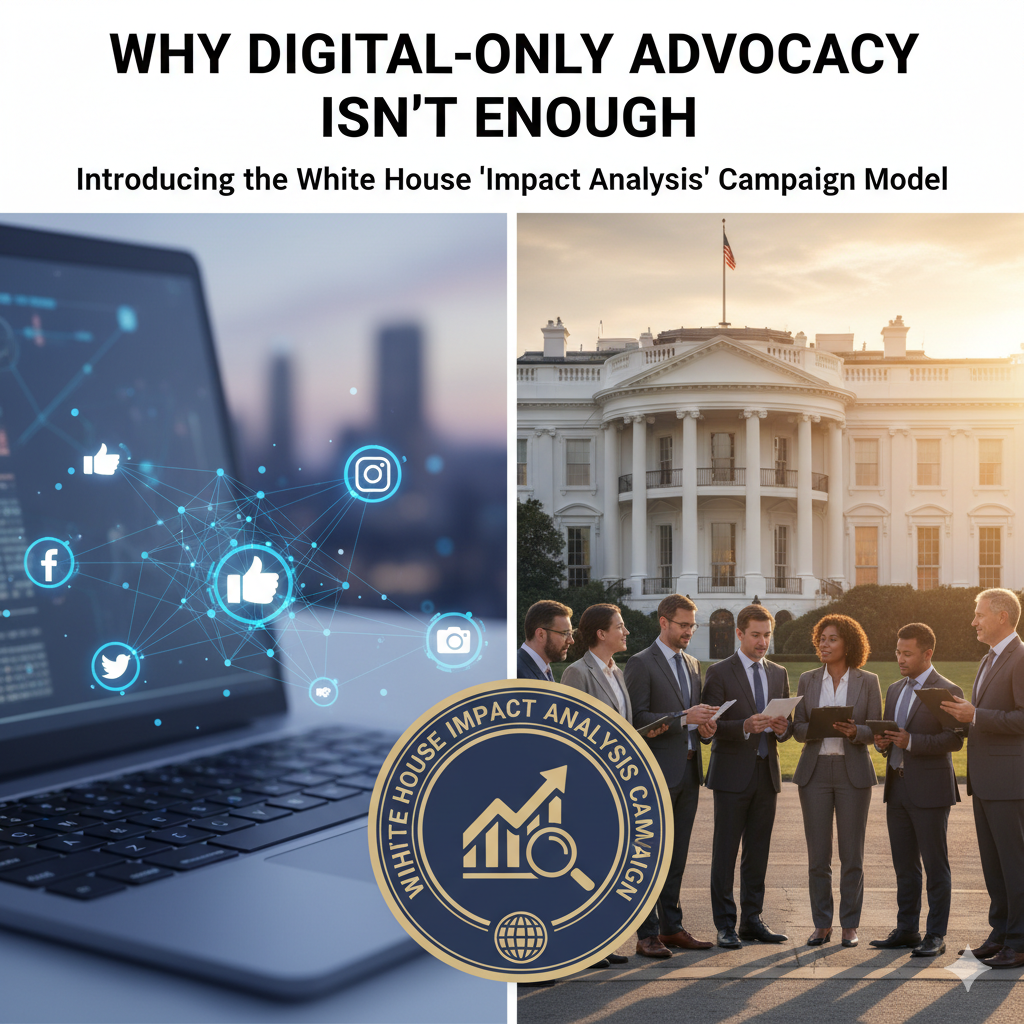
In today’s political climate, organizations rely on advocacy software to mobilize supporters and influence policy. But when it comes to engaging the White House, a major challenge exists: the official contact form at WhiteHouse.gov/contact is designed to prevent bulk submissions and automated campaigns.
Every advocate must submit individually. Messaging becomes fragmented. Organizational strategy loses cohesion. And impact becomes difficult to quantify.
At One Click Politics, we believe advocacy software must evolve to meet this reality.
The Problem with White House Digital Submissions
The White House contact form is intentionally structured to block automated bulk submissions. This makes sense from a cybersecurity standpoint. Government websites increasingly deploy anti-bot protections due to spam and coordinated abuse.
According to the U.S. Cybersecurity & Infrastructure Security Agency (CISA), bot mitigation and form protection technologies are standard best practices for federal sites: https://www.cisa.gov/news-events/news/understanding-denial-service-attacks
Additionally, automated web form submissions are often detected and filtered using behavioral analysis and bot management tools (e.g., CAPTCHA systems and traffic filtering), which are widely used across federal platforms.
Meanwhile, research consistently shows that personalized communication increases response rates and engagement, but coordinated messaging increases clarity and political pressure.
According to a study by the Data & Marketing Association, personalized messaging improves engagement rates significantly over generic outreach: https://thedma.org
And research published in the American Political Science Review shows that organized advocacy campaigns influence policymaker attention when volume and coordination are clear and measurable: https://www.cambridge.org/core/journals/american-political-science-review
The issue is not whether people care. It’s how that care is presented.
The New Model: White House Impact Analysis Campaigns
Instead of fighting the system, One Click Politics is introducing a smarter approach.
Step 1: Run a Fixed-Time Digital Advocacy Campaign
- Launch a dedicated campaign page.
- Mobilize supporters through email, social, and grassroots channels.
- Collect structured, consistent messaging from advocates.
- Capture supporter data and sentiment in real time.
- Aggregate participation metrics and issue trends.
This is grassroots advocacy — but digitally organized and measurable.
Step 2: Produce a Physical “Impact Analysis” Report
At the end of the campaign window, One Click Politics compiles:
- Total number of advocates
- Geographic distribution of supporters
- Key themes and message analysis
- Organizational framing of the issue
- Executive summary explaining why the issue matters
- Representative quotes from supporters
- Visual charts for rapid comprehension
- Signed advocate list
This becomes a professionally designed physical document. A physical asset.
Why Physical Delivery Matters
Research from the U.S. Postal Service Office of Inspector General shows that physical mail commands higher attention and recall than digital-only messaging: https://www.uspsoig.gov
Neuroscience studies cited by the USPS indicate physical materials create deeper cognitive engagement compared to digital formats.
A printed Impact Analysis delivered directly to the White House ensures that advocacy is tangible.
It exists.
It’s seen.
It’s handled.
It moves.
For organizations running federal campaigns, this model:
- Preserves message consistency
- Strengthens brand authority
- Creates measurable impact documentation
- Increases donor confidence with tangible reporting
- Produces a leave-behind asset for policy discussions
Advocacy software shouldn’t just send messages. It should create leverage.
If your organization wants to run a strategic, measurable White House advocacy campaign, One Click Politics can design and deploy your Impact Analysis initiative.
Sign up to learn more https://oneclickpolitics.com